
How to build a service business without sacrificing your margins, your team, or your standards.
Written by Maxx Burman | Art by Erik Guarisco
I spent the first decade of my career working for agencies, from visual effects studios to production companies and design firms. The business model was largely the same: a client hired us to make something, we assembled a team to deliver it, and we got paid for the service we provided.
Over those years, I worked at 35 different studios and saw nearly every version of this model. Some were small teams of a dozen people, others had hundreds of employees, and many were working for the biggest brands in the world. Today, a third of those studios are no longer in business.
I eventually started a visual effects studio of my own, and within a year we were working on projects for Game of Thrones, League of Legends, and Far Cry. We had talented artists, exciting clients, and work I was incredibly proud of, but underneath all of it was a business model I could not make work. After a year, I shut the studio down.
After spending so much of my career inside service businesses, I had become convinced that agency work was fundamentally unsustainable. The margins were too fragile, the incentives were too often misaligned, and growth seemed to create more complexity instead of more leverage. I was wrong.

We built KitBash to be a very different kind of business. Instead of projects, we wanted to make products. Instead of clients, we wanted to have customers. And instead of rebuilding revenue from scratch with every engagement, we wanted to create something once and sell it thousands of times. From the beginning, we made one rule very clear: We don’t do client work.
For the first few years, studios would regularly reach out asking if we could build something custom for a film or game, and we would turn the work down. We had built the kind of business we wanted: we created products we owned, sold them directly to customers, and continued generating revenue from the work long after it was finished.
Then, in 2023, Fortnite approached us about collaborating with Paramount on a custom Kit for Teenage Mutant Ninja Turtles. For years, I had imagined KitBash creating licensed collections the way LEGO had with franchises like Star Wars and Harry Potter, giving people the pieces to build inside worlds they already loved. A TMNT Kit felt like a doorway into that future.
But the economics were fundamentally different from our core business. We would not own the intellectual property, the customer relationship, or a product we could continue selling indefinitely. No matter how exciting the opportunity was, this was client work.
I did not want to make an exception simply because the project was appealing. If we were going to build a team, create a pipeline, and open the company up to this kind of work, I wanted to know we could turn it into a profitable, repeatable part of the business. So I started looking at what made agency models so fragile, which problems were actually fixable, and what we would need to do differently.
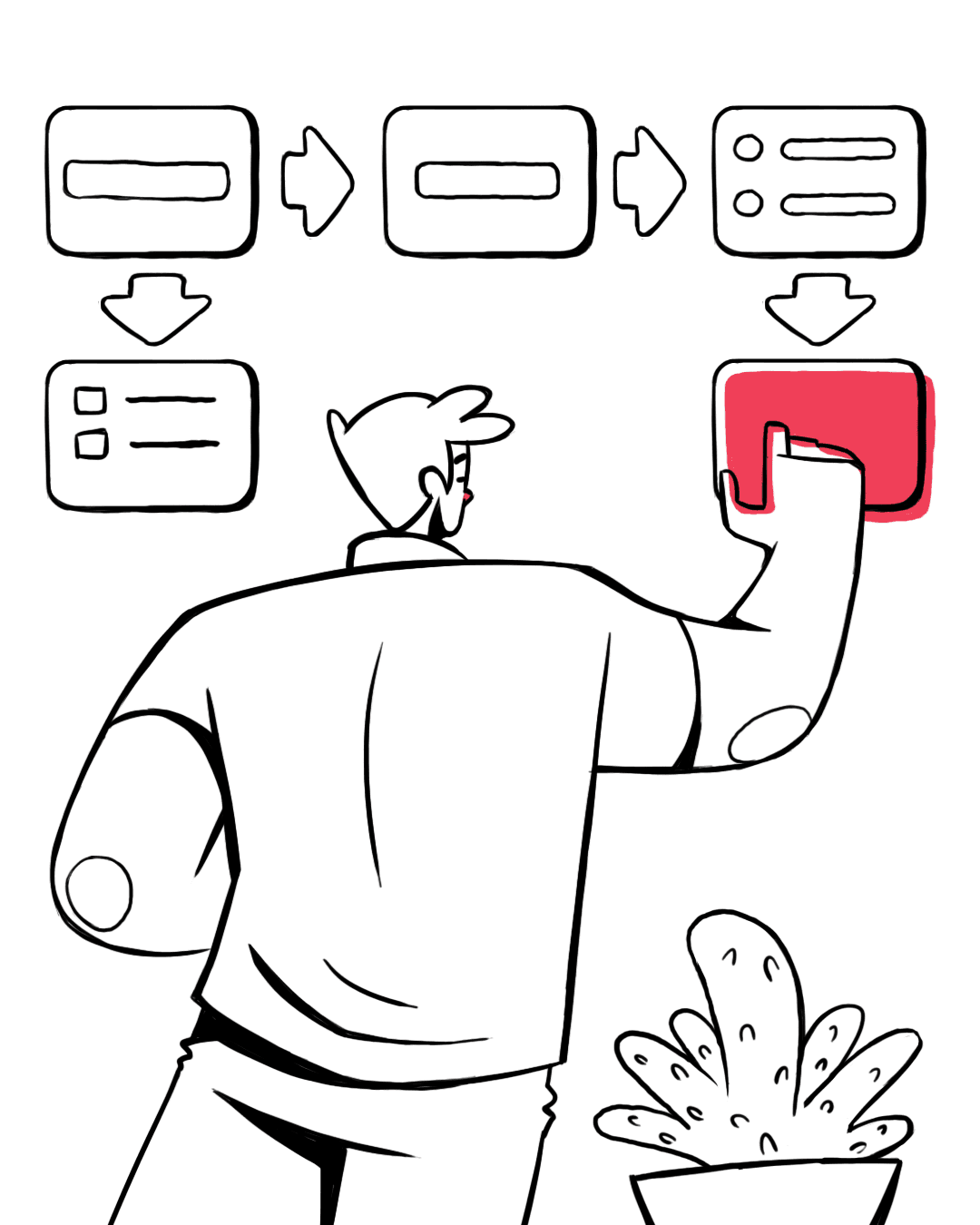
We approached agency work the same way we approached the rest of the business: as a challenge of building repeatable, scalable systems. Instead of asking whether we could make one project work, we asked ourselves a much harder question: how would we feel if we did this ten times? A hundred times?
Creative work will always contain uncertainty. Scope changes, feedback gets delayed, and ideas require more iteration than expected. The problem is not that those risks exist, but that the traditional agency model often pushes them in one direction: toward the agency.
A fixed bid shifts cost risk onto the agency. A client-defined deadline shifts schedule risk onto the production team. Discounts, additional requests, and one-off work create the same imbalance in different ways. Eventually, all of that risk gets paid for somewhere: the margins, the quality, or the team.
Any one of those compromises can be justified once. Repeated often enough, they become the economics of the company. We need to design a model where the risks were visible, the margins could withstand the unknowns, and the same decisions would still make sense every time we repeated the work.
We developed what became the 5 Rules of a Profitable Agency. These were not meant to make every project easier to win. In many cases, they did the opposite by helping us identify the projects we should not take, the clients we were not aligned with, and the compromises that would eventually make the business unsustainable.
The pillars we created were not designed to make every project easier to win. In many cases, they did the opposite. They helped us identify the projects we should not take, the clients we were not aligned with, and the compromises that would eventually make the business less profitable.
Charge For Time.
The appeal of a flat bid is obvious: if an agency finishes a project early, the extra efficiency becomes additional profit. In my experience, that almost never happens. Work consistently expands to fill the time available, and while a flat bid gives the client certainty around cost, it creates uncertainty for the agency’s margin. Every estimate becomes a gamble, and every note or revision starts to feel like a threat to profitability.
Instead, we charge per person, per week on every project. Our production team estimates how many people and how many weeks the work will require, and that schedule creates the projected budget. If the project moves smoothly with minimal iteration, the client spends less than their maximum budget; if they want additional notes, exploration, or revisions, there is a clear and transparent cost associated with that time.
First Projects Are Full Price.
A common trap in agency work is discounting the first project to get in the door. The logic is that if you can make the first engagement cheaper, faster, or easier for the client, you can prove your value and make up the difference on larger projects later. The problem is that the first project establishes the baseline for the entire relationship.
Whatever you agree to the first time becomes what the client believes is normal. If you discount the price, compress the timeline, or make exceptions to your process, raising the price or resetting those expectations later becomes significantly harder. Instead of earning a great long-term client, you may simply be creating a relationship you don't want to repeat.
We charge full price on the first project and protect the timeline, resources, and process we believe the work requires. Once we have successfully worked together, we can look for efficiencies and ways to make future projects better for both sides, but we never compromise the first engagement just to get in the door.
Own The Timeline.
Clients often come to an agency with an arbitrary deadline or a timeline built without a nuanced understanding of production realities, iteration needs, or internal constraints. When an agency accepts that schedule, it also inherits all of the assumptions behind it. Even small shifts can cascade into missed milestones, crunch, and eventually burnout, compromising both the health of the team and the quality of the work.
We build timelines in the opposite direction. We start with the client’s needs, then work forward from the start date with our production team to estimate how much time, iteration, and buffer the project realistically requires based on our experience with similar work. If that timeline works for the client, great. If it does not, we revise the scope or resources until the schedule works for everyone.
Prioritize Compounding Work.
One-off work can be profitable and still be bad for the business. If every project requires a new pipeline, unfamiliar capabilities, or a custom process that will never be used again, the agency is forced to solve a new set of problems every time it grows. Revenue may increase, but so does complexity.
We prioritize work that builds on capabilities we already have or want to strengthen. Every project should leverage our expertise, improve our existing systems, or create processes we can use again, so the investment we make today makes the next project easier and more profitable.
Say No Often.
A common trap in agency work is believing that always saying yes makes clients happier and more likely to return. In practice, too much accommodation usually makes the work worse. It bypasses the expertise the client hired you for and leads to compromised quality, unclear expectations, and broken processes.
Clients will often make requests that seem reasonable in isolation but create problems when combined. Part of the agency’s job is to guide the work, protect the process, and be willing to say no when a request will hurt the outcome. Clear expectations and consistently excellent delivery build more trust than constant accommodation.
Great service is not compliance. It is leading a client to a winning outcome.

Get the full Profitable Agency Playbook
These five rules became the foundation of how we approached agency work, and we built out a full operating system to qualify clients, ensure production capacity, and set up our teams for success.
I’ve made the system available for free for anyone who want’s to implement this into their studio.
DOWNLOAD THE PDF
We ended up taking the Teenage Mutant Ninja Turtles project, and it worked. Epic Games, Paramount, and our team were all happy with both the result and the process, which gave us confidence that the model could be repeated.
In the years that followed, KitBash went on to build partnerships around The Walking Dead, Squid Game, Star Wars and many more properties..
Three years after breaking our rule against client work, the team has doubled in size and agency work has become a meaningful, highly profitable part of the business. More importantly, growth has not required us to sacrifice the margins, standards, or team health that I have seen erode at so many agencies earlier in my career.
For a long time, I believed agency businesses were fundamentally broken. Looking back, I still believe the problems I saw were real, but I no longer think they were inevitable. The issue was not client work itself; it was the set of assumptions agencies repeatedly accepted around pricing, timelines, risk, and service.
A profitable agency does not need perfect projects or perfect clients. It needs a business model that can withstand uncertainty, a process that gets stronger as the work repeats, and the discipline to protect both when pressure arrives.
Profitability is not something you discover at the end of a project. It is something you design into the rules before the project begins.